What Are Jars With Rubber Seals Called? Jar Types

60% off on product page · save $29.30
What Are Jars With Rubber Seals Called? Jar Types
What Are Jars With Rubber Seals Called?
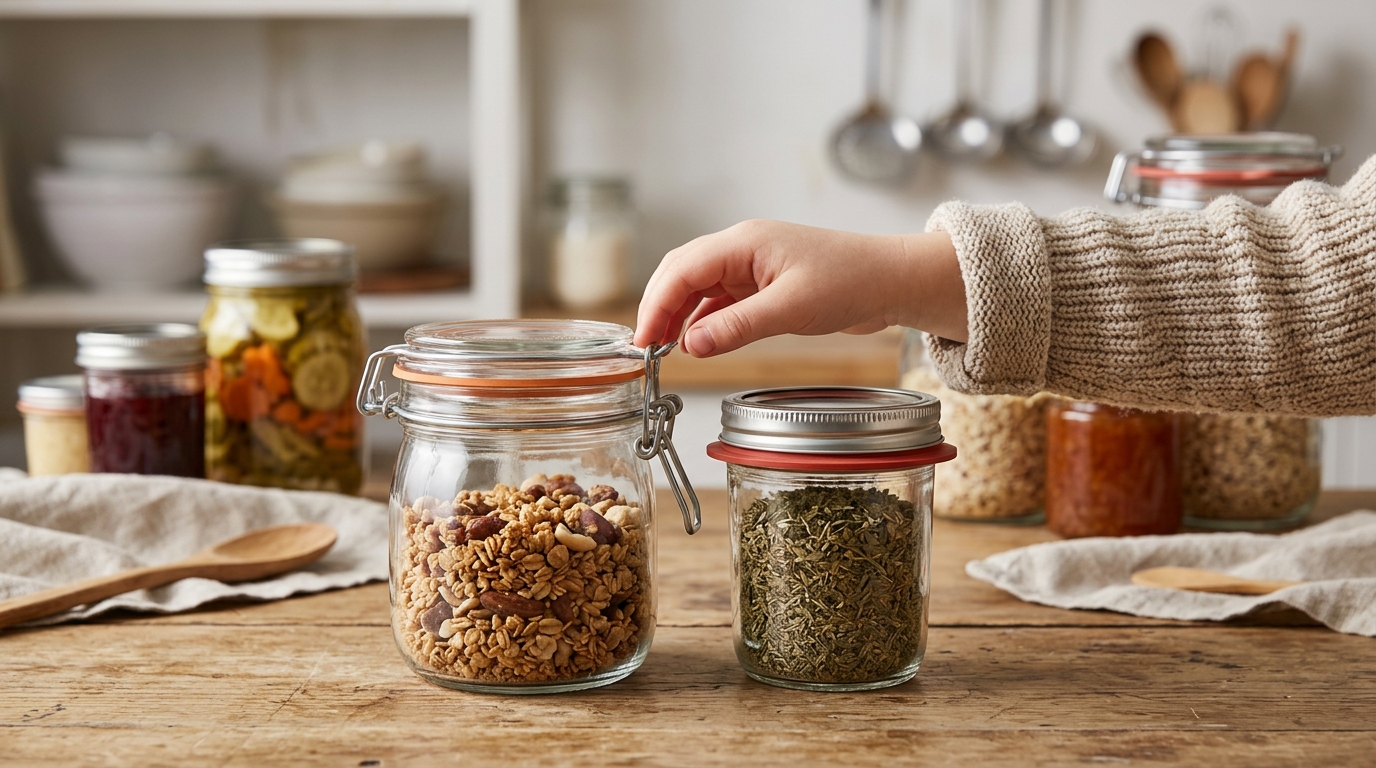
Jars with rubber seals are commonly called clamp-top jars , bail jars , or wire-bail jars . They use a hinged glass lid, a replaceable rubber gasket, and a metal wire clasp that presses the lid firmly against the jar’s rim.
Common Names and Styles
“Clamp-top” describes the locking mechanism, while “bail” refers to the wire hardware that holds the lid closed. Kilner, Fido, and Le Parfait are familiar examples. Weck jars also use rubber sealing rings, although their lids are secured with separate metal clips rather than an attached wire bail.
Featured in this guide
Vintage Embossed Glass Storage Jar with Airtight Seal – 23.7 oz
How the Rubber Seal Works
The gasket fills the narrow space between the glass lid and rim, creating an airtight closure when compressed. Before use, check that the ring lies flat and has no cracks, stretching, or hardened areas. Replacement rings must match the jar’s opening diameter and lid style.
Choosing a Jar for Storage
Clamp-top jars are practical for dry goods such as coffee, pasta, candy, and spices. For a closer look at capacity, embossed glass, and decorative storage features, see this guide to a 23.7-ounce vintage embossed glass storage jar. Do not assume every decorative gasket jar is approved for heat processing; verify the manufacturer’s canning instructions first.
FAQ
Where can I find rubber seals for jars?
Rubber seals for jars are sold by canning suppliers, kitchenware stores, manufacturer websites, and online marketplaces. Measure the jar opening and confirm the brand or model before ordering.
What is the mason jar called now?
The mason jar is still commonly called a Mason jar, although “canning jar” and “preserving jar” are also used. Ball and Kerr are prominent modern brand names rather than different jar categories.
What are some different types of glass jars and their names?
Common glass jar types include Mason jars, clamp-top jars, Weck jars, apothecary jars, spice jars, cookie jars, and straight-sided storage jars. Their names often describe the closure, shape, or intended use.
What year did mason jars have rubber around the lid?
Mason jars began using rubber sealing rings in the late 1850s. John Landis Mason patented his threaded glass jar in 1858, and early versions were commonly sealed with a reusable zinc screw cap and a separate rubber ring placed around the jar’s mouth.
See if Vintage Embossed Glass Storage Jar with Airtight Seal – 23.7 oz fits your setup













Leave a comment