Oldest Mason Jars: How to Identify 1858 Originals
60% off on product page · save $29.30
Oldest Mason Jars: How to Identify 1858 Originals
What Is the Oldest Mason Jar?
The oldest true Mason jars date to 1858, when New Jersey tinsmith John Landis Mason patented a glass container with a threaded neck and matching screw-on zinc lid. Early examples are commonly called Mason’s Patent Nov. 30th 1858 jars because that date was embossed on the glass.
No single surviving jar is universally recognized as the oldest Mason jar ever made. However, authentic jars produced around 1858 and the early 1860s represent the first generation of Mason’s patented design.
How Early Mason Jars Were Made
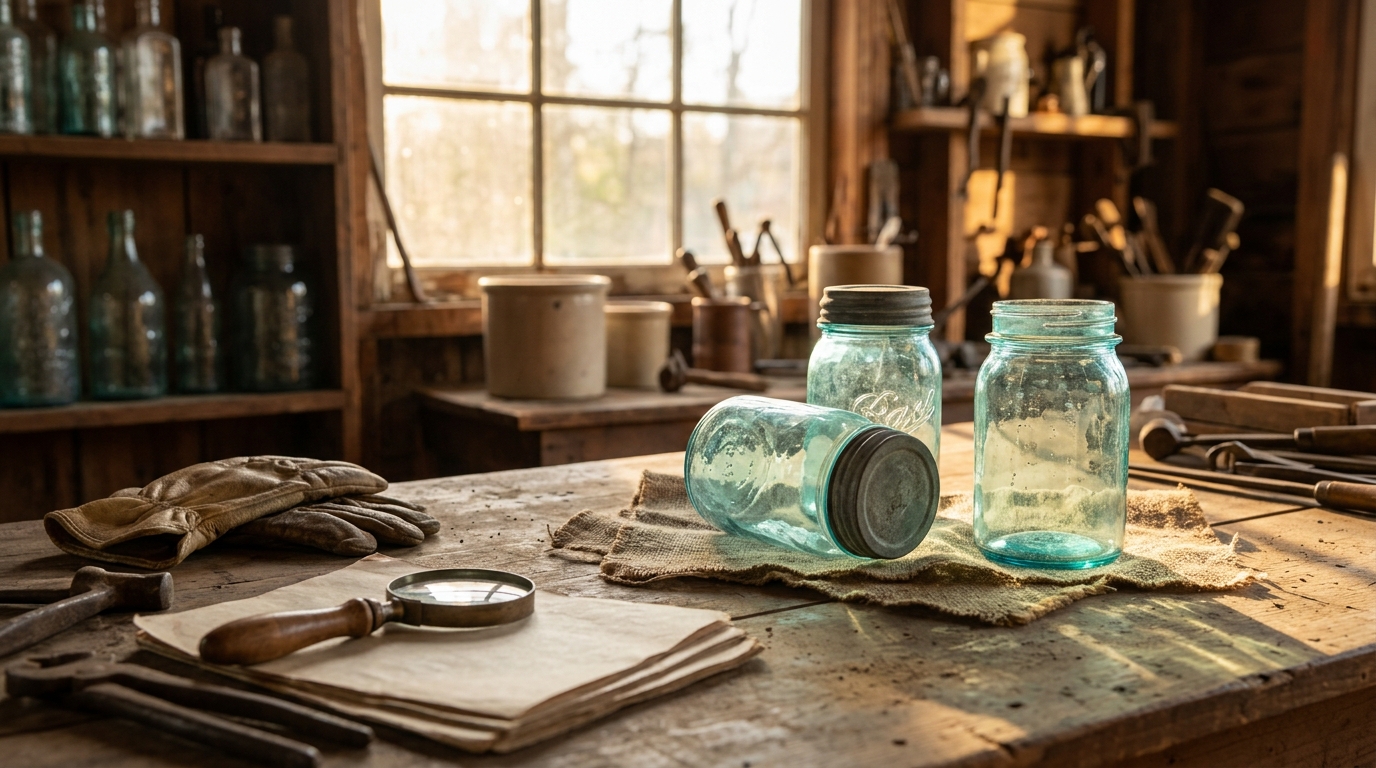
The earliest jars were hand-blown or produced with primitive molds, so they may have uneven glass, bubbles, rough seams, and an irregular base. Many used aqua-colored glass and zinc screw caps with milk-glass liners. Collectors should inspect the embossing, closure, mold marks, and glass construction rather than relying on color alone.
Featured in this guide
Vintage Embossed Glass Storage Jar with Airtight Seal – 23.7 oz
Identifying an Original 1858-Style Jar
Look for embossed wording such as “Mason’s Patent Nov. 30th 1858,” but remember that the patent date does not always equal the manufacturing date. This wording continued to appear on jars made years later. Compare the jar’s lip, base, seams, and closure with documented examples before assigning an age or value.
Learning More About Vintage Storage Jars
Age is only one part of evaluating old glass. Condition, maker, embossing variation, color, and lid completeness can substantially affect collectibility. For additional details about embossed glass and practical jar features, visit the vintage embossed glass storage jar guide.
FAQ
What is the oldest Mason jar ever made?
The oldest Mason jars were made following John Landis Mason’s 1858 patent. There is no universally documented individual jar recognized as the single oldest surviving example.
What old Mason jars are worth money?
Old Mason jars may be valuable when they have rare colors, unusual embossing, scarce closures, manufacturing errors, or strong provenance. Chips, cracks, replacement lids, and heavy staining generally reduce value.
What are the oldest Mason jars?
The oldest Mason jars are early threaded glass containers based on Mason’s 1858 patent. Examples from the late 1850s and 1860s often feature aqua glass, zinc lids, and embossed patent wording.
See if Vintage Embossed Glass Storage Jar with Airtight Seal – 23.7 oz fits your setup













Leave a comment