What Is the Oldest Mason Jar? An 1858 Dating Guide
60% off on product page · save $29.30
What Is the Oldest Mason Jar? An 1858 Dating Guide
What Is the Oldest Mason Jar Ever Made?
The oldest Mason jars date to 1858, when New Jersey tinsmith John Landis Mason patented a glass jar with a threaded neck and screw-on zinc lid. No single surviving jar is universally recognized as the first one manufactured, but authentic examples produced soon after the patent are considered the earliest Mason jars.
These early jars are commonly embossed with “Mason’s Patent Nov. 30th 1858.” That date identifies the patent rather than the jar’s manufacturing year, so a jar bearing the inscription could have been made decades later.
How the Original Mason Jar Worked
Mason’s design used molded glass threads that paired with a reusable metal lid. A rubber sealing ring created an airtight closure, making home food preservation more practical than systems relying on corks, wax, or less reliable clamps.
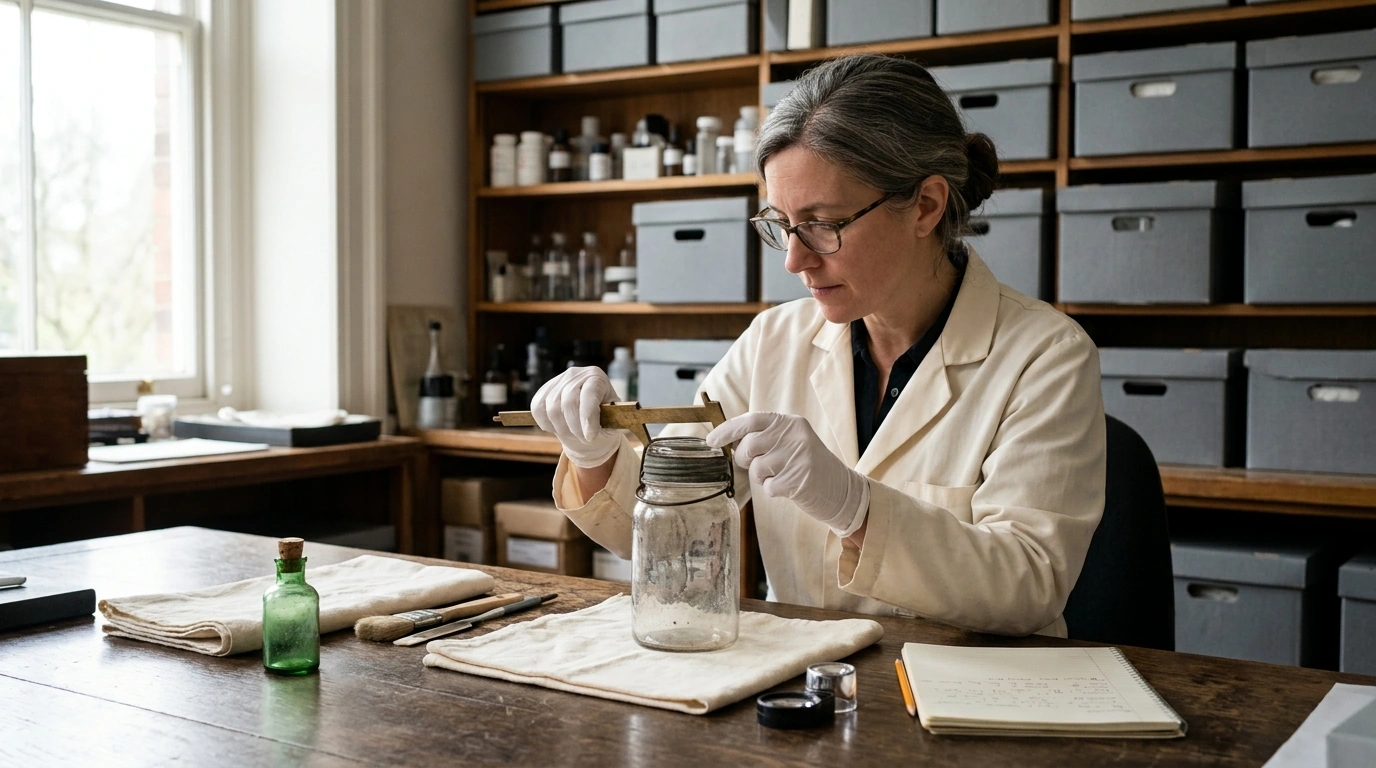
Early examples were hand-finished and often show bubbles, uneven glass, mold seams, or an irregular lip. Inspect the neck carefully, as period zinc lids and intact glass threads help establish compatibility with the original closure system.
Featured in this guide
Vintage Embossed Glass Storage Jar with Airtight Seal – 23.7 oz
How to Identify an Early Example
Collectors evaluate the embossing style, mold construction, base markings, glass color, and closure before estimating age. Aqua glass is common among nineteenth-century jars, while unusual amber, cobalt, or olive colors may be more collectible.
Do not date a jar from the patent inscription alone. Compare its mold seams, mouth finish, and maker’s marks with documented examples, and consult a specialist before purchasing an expensive jar.
Preserving Historic Glass Jars
Clean antique glass gently with lukewarm water, mild dish soap, and a soft cloth. Avoid boiling water, abrasive pads, and sudden temperature changes, which can crack old glass or damage its surface.
For more information about embossed storage glass and decorative jar features, visit the vintage embossed glass storage jar guide.
FAQ
What is the most rare Mason jar?
The rarest Mason jars are generally scarce nineteenth-century variants with unusual colors, embossing errors, experimental closures, or extremely limited production. The Van Vliet Improved jar and certain upside-down Ball jars are often cited as rare, but condition and authenticity strongly affect scarcity and value.
Are old Mason jars worth any money?
Old Mason jars can be worth money, with ordinary examples often selling modestly and rare specimens bringing hundreds or even thousands of dollars. Value depends on age, color, maker, closure, condition, embossing, and documented rarity.
See if Vintage Embossed Glass Storage Jar with Airtight Seal – 23.7 oz fits your setup













Leave a comment