Dating Ball Jars by Logos, Colors, Lids and Marks
60% off on product page · save $29.30
Dating Ball Jars by Logos, Colors, Lids and Marks
Start With the Ball Logo
The script-style Ball logo is usually the best starting point for estimating a jar’s age. Compare its lettering, underline, and loops with a reliable logo chronology: early jars may feature block lettering, while later versions use variations of the familiar cursive logo.
Small differences matter. For example, a dropped “a,” an open “B,” or the presence of an underscore can narrow production to a particular range rather than an exact year.
Inspect the Jar’s Color and Glass
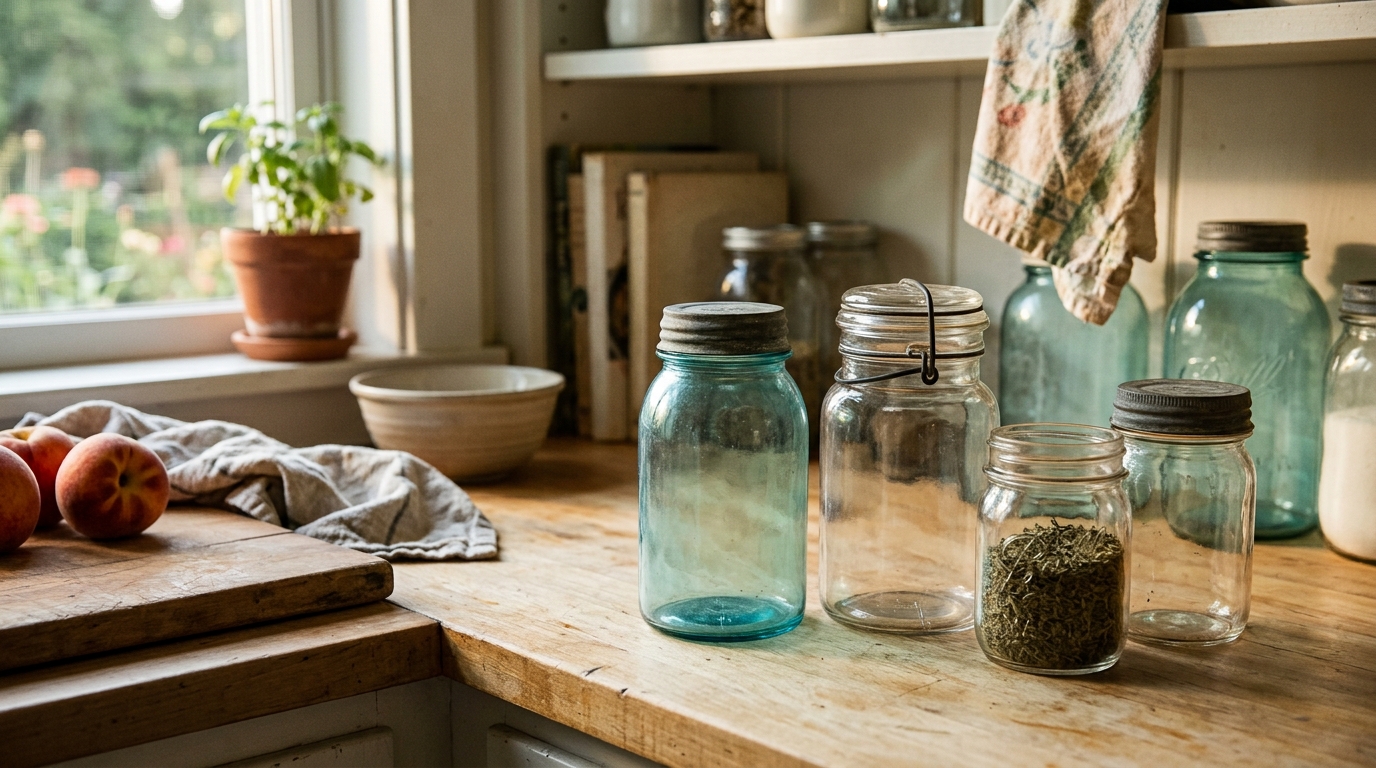
Color provides another useful clue. Aqua “Ball blue” jars were widely produced from the late 1800s into the early 20th century, while clear glass became increasingly common during the 20th century.
Look for bubbles, waviness, heavy glass, and irregular edges, which may indicate older manufacturing methods. However, color alone cannot confirm age because reproductions and commemorative jars also come in vintage-inspired shades.
Featured in this guide
Vintage Embossed Glass Storage Jar with Airtight Seal – 23.7 oz
Check the Closure and Embossing
Examine the closure for a zinc screw lid, glass insert, wire bail, or modern two-piece canning lid. Older closure styles can help establish a general period, although lids are interchangeable and may not be original to the jar.
Record every embossed phrase, including “Mason’s Patent,” “Perfect Mason,” or “Ideal.” Then compare those markings with documented Ball jar styles in this vintage embossed glass storage jar guide.
Do Not Treat Bottom Numbers as Dates
A single number on the base is generally a mold, cavity, or production identifier—not the year of manufacture. Additional letters, plant codes, patent information, and manufacturer marks may be more helpful when considered together.
Photograph the logo, base, side embossing, rim, and closure before researching the jar. Matching the complete combination of features produces a more dependable date range.
Check the listed dimensions for do not treat bottom numbers as dates against the available vehicle space before use.
Allow for Reproductions
Ball has issued anniversary and reproduction jars that resemble antique examples. Check packaging history, glass uniformity, modern seams, and current-style lids before assuming an aqua or embossed jar is old.
For a valuable-looking jar, compare confirmed auction results or consult an experienced bottle collector. Condition, rarity, color, and embossing errors can affect value more than age alone.
FAQ
How can I identify the year my ball jar was made?
Identify your Ball jar’s approximate year by comparing its logo style, embossing, color, closure, and glass construction with dated references. Most jars can be assigned a production range rather than one exact year.
How do I date ball mason jars?
Date Ball mason jars by starting with the embossed Ball logo and then verifying the closure, color, seams, and wording. Do not rely on one feature because lids can be replaced and reproductions may copy older designs.
Which vintage ball mason jars are the most valuable?
The most valuable vintage Ball mason jars are typically rare colors, unusual sizes, scarce embossing variants, and documented error jars. Excellent condition and an original closure can substantially increase collector interest.
What do the numbers mean on the bottom of a mason jar?
Numbers on the bottom of a mason jar usually identify a mold or production cavity. They generally are not manufacturing dates, although surrounding factory codes may provide useful evidence.
How do I know if my ball mason jars are valuable?
Ball mason jars may be valuable when they combine rarity, desirable color, unusual embossing, and minimal damage. Compare identical examples—not merely similar jars—with recent completed sales.
See if Vintage Embossed Glass Storage Jar with Airtight Seal – 23.7 oz fits your setup










Leave a comment