Blue Mason Jar Value: Age, Color and Rarity Guide
60% off on product page · save $29.30
Blue Mason Jar Value: Age, Color and Rarity Guide
Identify the Jar’s Maker and Age
Start by reading every embossed word, logo, patent date, and mold mark on the blue Mason jar. Ball, Atlas, Kerr, Mason’s Patent Nov. 30th 1858, and Lightning markings can indicate different production periods; compare the lettering style and logo orientation with dated collector references. For broader guidance on embossed glass, review this vintage embossed glass storage jar guide.
Examine the Blue Glass Color
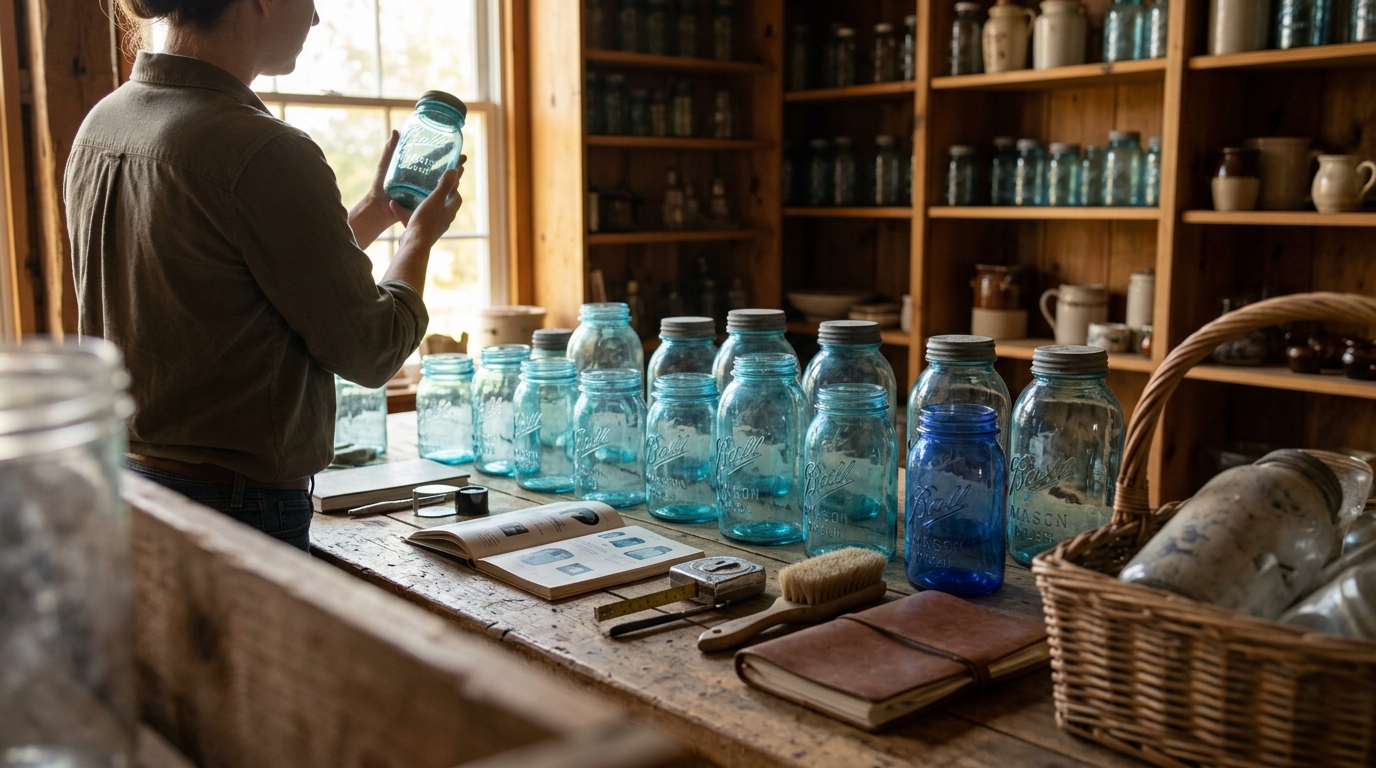
Place the empty jar against white paper in indirect daylight to distinguish pale aqua from cobalt, cornflower, teal, or olive-blue glass. Common aqua jars generally sell for less than scarce, intense colors, but color alone does not prove rarity. Avoid jars with unnaturally uniform color or signs of modern irradiation, staining, or coating.
Featured in this guide
Vintage Embossed Glass Storage Jar with Airtight Seal – 23.7 oz
Match the Closure and Jar Dimensions
Check whether the jar has its correct zinc screw lid, glass insert, wire bail, or glass lid and rubber-gasket channel. Measure the mouth diameter, overall height, and base width to confirm that the closure fits the jar’s original design. An authentic, matching closure can improve value, while a replacement lid should be disclosed.
Inspect Rims, Threads, and Glass for Specific Damage
Run a cotton swab carefully around the rim and threads; fibers often catch on tiny chips that are difficult to see. Shine a flashlight through the base and shoulder to locate hairline cracks, bruises, internal fractures, or open bubbles. Original bubbles and stretch marks may reflect older manufacturing, but cracks, ground rims, and large chips substantially reduce collectible value.
Verify Rarity With Completed Sales
Search recent completed auction and marketplace sales using the exact maker, embossing, color, size, and closure type. Compare only jars in similar condition, then use several sold prices rather than a single asking price. For a high-value color or rare mold variation, obtain an appraisal from an experienced fruit-jar specialist before selling.
FAQ
Which blue Mason jar is the most valuable?
The most valuable blue Mason jar is typically a documented rare color, mold variation, or early patent jar in excellent condition. Deep cobalt examples and scarce error jars can command high prices, but authenticity, embossing, and verified scarcity matter more than blue color by itself.
What Mason jar numbers are worth money?
Mason jar numbers on the base are usually mold or production identifiers, not automatic indicators of value. Certain numbers may be desirable when paired with a documented rare logo, color, size, or manufacturing variation, so compare the complete jar with verified collector references and completed sales.
See if Vintage Embossed Glass Storage Jar with Airtight Seal – 23.7 oz fits your setup










Leave a comment