How Do You Tell the Age of a Mason Jar? Dating Guide

60% off on product page · save $29.30
How Do You Tell the Age of a Mason Jar? Dating Guide
Start With the Embossed Logo and Lettering
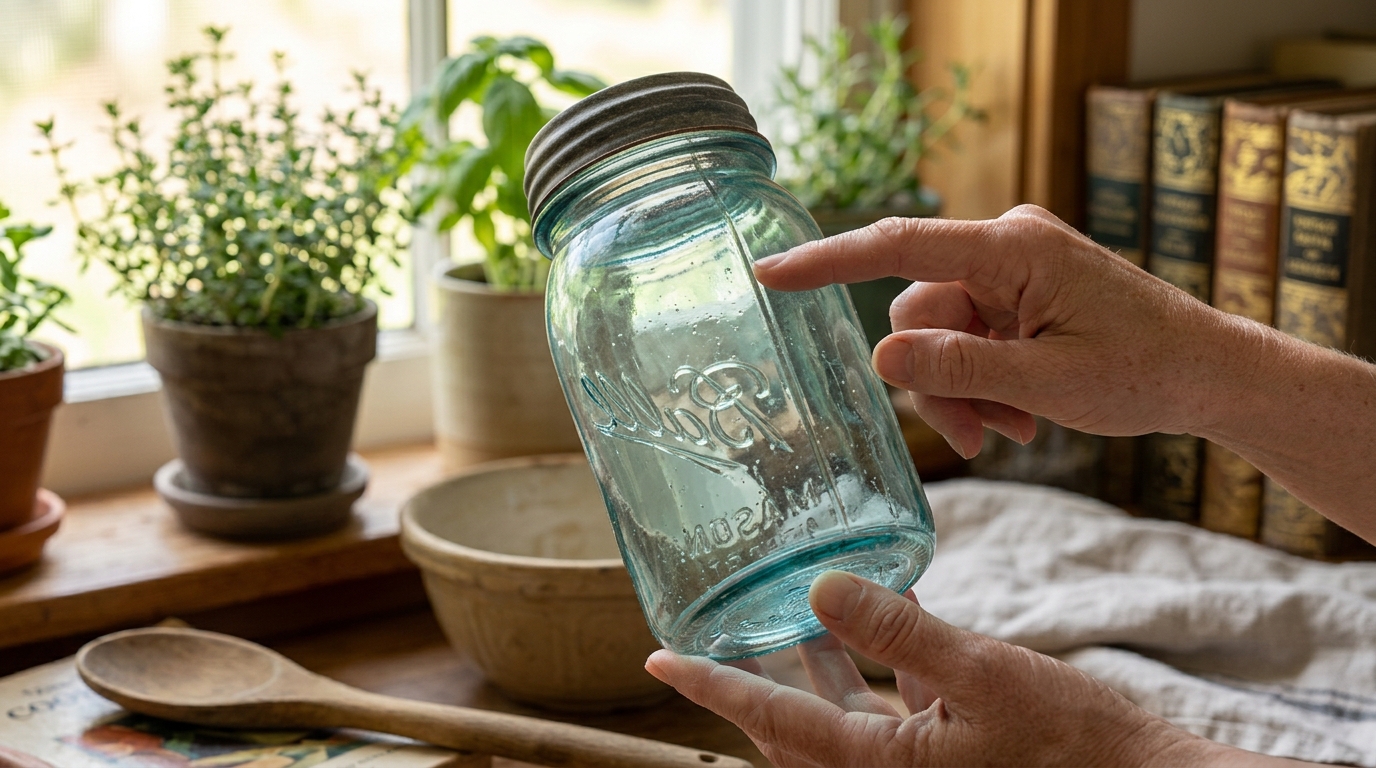
Examine the raised brand name, script style, and placement on the jar. Ball jars, for example, can often be dated by comparing the shape of the “B,” the underline, and connecting letter strokes with documented logo timelines.
Photograph the embossing straight on in natural light, then compare it with a reputable manufacturer chart. Small details matter: a looped letter or missing underline may narrow production to a particular decade.
Check the Closure and Jar Rim
The closure provides practical dating evidence. Early jars may have ground-glass lips, glass lids with wire bails, or zinc screw caps lined with milk glass, while later canning jars typically accept standardized two-piece metal lids.
Remove the lid carefully and inspect the rim without forcing corroded hardware. A rough, hand-finished lip generally suggests older manufacture than a smooth, uniform machine-made rim.
Featured in this guide
Vintage Embossed Glass Storage Jar with Airtight Seal – 23.7 oz
Inspect Mold Seams and the Base
Follow the vertical mold seam toward the mouth: seams that stop below the lip can indicate an earlier finishing method, whereas seams continuing through the rim usually reflect automated production. On the base, look for mold numbers, manufacturer marks, patent dates, and plant codes.
Record every symbol exactly and measure the jar’s height and mouth diameter. Numbers alone rarely state the year, but their combination with construction details can establish a credible date range.
Evaluate Glass Color and Manufacturing Clues
Aqua glass is common in many late-19th- and early-20th-century jars because of naturally occurring iron in the raw materials. Clear glass became increasingly prevalent as manufacturing and decolorizing methods improved, although color by itself cannot confirm age.
Hold the empty jar against a white background to distinguish aqua, amber, olive, and clear glass. Bubbles, waviness, and thickness variations support older production, but reproductions may imitate these traits.
Verify the Jar Before Assigning a Date
Combine at least three features—logo, closure, and mold construction—before estimating age. Patent dates indicate that production occurred on or after the stated date, not necessarily during that exact year.
Compare your findings with collector references and the vintage embossed glass storage jar guide. Do not use chipped, cracked, or unidentified antique jars for heat processing; reserve them for display or dry storage.
FAQ
What year is my Mason jar?
Your Mason jar’s year can be estimated by matching its embossed logo, closure, mold seams, and base markings to manufacturer records. Most jars can be assigned a production range rather than one exact year.
Which old Mason jars are worth money?
Old Mason jars may be worth money when they have rare colors, unusual closures, scarce embossing errors, or limited-production designs. Value also depends on authenticity and condition, with cracks, chips, and replaced parts generally reducing the price.
See if Vintage Embossed Glass Storage Jar with Airtight Seal – 23.7 oz fits your setup












Leave a comment