Scalp Massage Shampoo Brush & Body Scrubber Guide
66% off on product page · save $12.18
A More Considered Scalp and Body Cleansing Ritual
Why Add a Scalp Brush to a Shampoo Routine?
Fingertips can cleanse the scalp effectively, but a handheld brush offers consistent contact across the roots. It may be especially convenient for thick or dense hair, where reaching the scalp without vigorously scrubbing the hair lengths can be difficult.
During shampooing, the brush helps spread lather and mechanically loosen excess oil, surface flakes, and styling-product residue. The massage can also feel relaxing. However, a scalp brush is a cleansing accessory—not a treatment for hair loss, psoriasis, dandruff, or another medical condition.
Scalp Brush Uses at a Glance
| Routine | Suggested Technique | Potential Benefit | What to Avoid |
|---|---|---|---|
| Shampooing | Move gently across the wet scalp in small sections | Distributes shampoo and loosens surface buildup | Aggressive circular rubbing that tangles hair |
| Scalp massage | Use light pressure for a short period | Adds a relaxing massage step | Assuming massage will treat hair loss |
| Body cleansing | Apply cleanser and glide over intact skin | Supports lathering and mild exfoliation | Using it on cuts, sunburn, or inflamed skin |
| Tool care | Rinse thoroughly and air-dry after use | Reduces trapped residue and moisture | Storing the scrubber wet in an enclosed space |
The Gentle Scalp Method
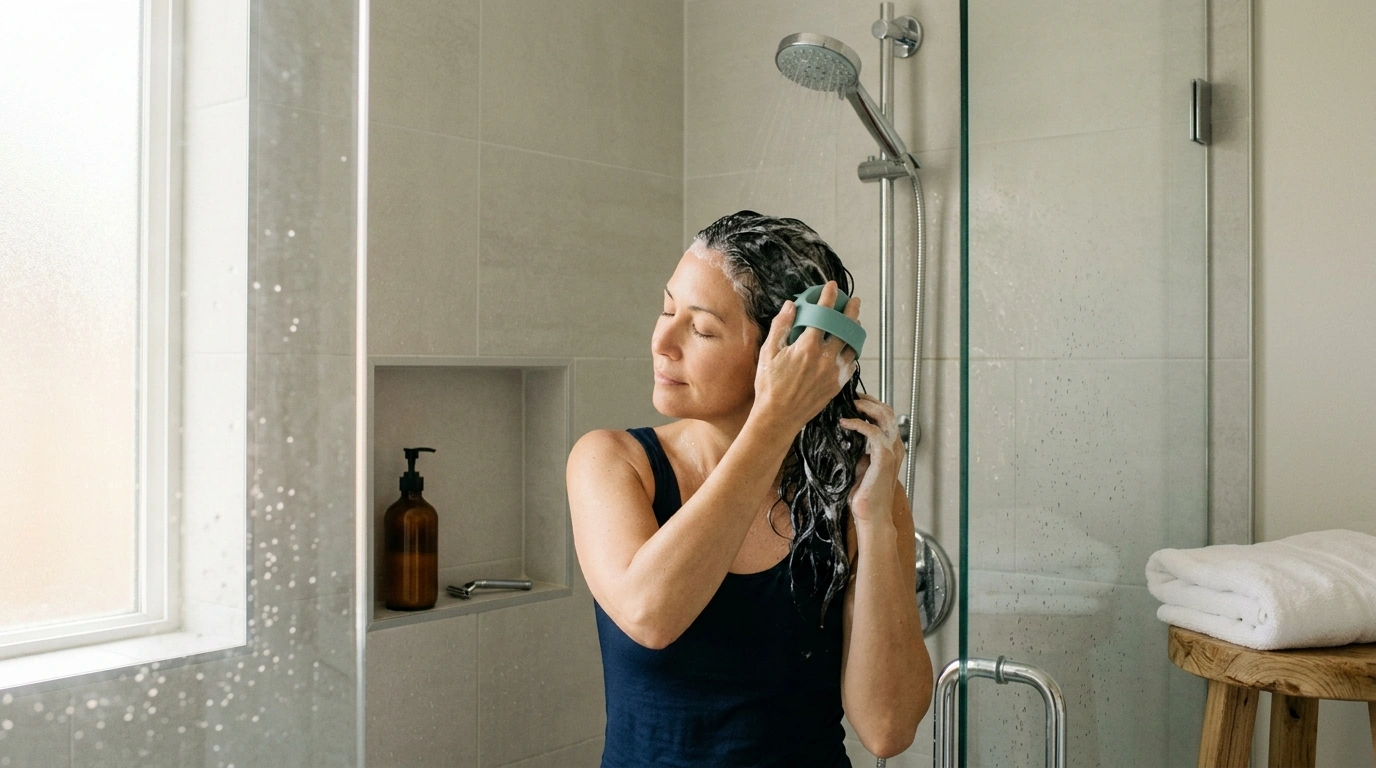
Wet the hair and scalp completely, then apply a shampoo suited to your hair and skin. For long, curly, coily, thick, or easily tangled hair, work in sections so the brush reaches the roots without dragging through the lengths.
Hold the brush securely and use short, controlled movements with light pressure . Avoid forceful back-and-forth scrubbing, aggressive circles, or repeatedly working one spot. Focus on oily or buildup-prone areas without passing over broken skin, active sores, tender bumps, recent procedures, or visibly inflamed patches.
Rinse thoroughly and stop if you notice pain, persistent redness, worsening flakes, or unusual breakage. Frequency should follow individual tolerance: dry or reactive scalps may need less frequent use than oilier scalps exposed to regular styling products.
Featured in this guide
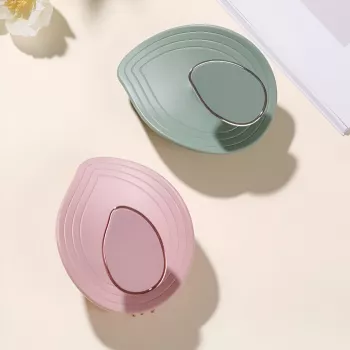
Exfoliating Scalp Massage Shampoo Brush & Body Scrubber
From Scalp Care to Body Cleansing
For body use, pair the scrubber with a mild body wash and warm—not very hot—water. Glide it gently over intact skin on the arms, legs, shoulders, and feet. Take extra care around thin or sensitive areas, and avoid the face unless the manufacturer specifically identifies the tool as suitable for facial use.
Mechanical exfoliation should not hurt. Stinging, rawness, or lingering redness can signal excessive pressure, duration, or frequency. Follow cleansing with a moisturizer appropriate for your skin.
Do not apply a grainy body scrub to the scalp. Coarse particles, fragrance, and oils may irritate scalp skin or remain trapped in hair. If using one tool for both routines, rinse it carefully between areas. Separate tools may be preferable for anyone prone to folliculitis, fungal infections, or recurring irritation.
Pair It with the Right Cleanser
A regular shampoo is often sufficient when the aim is better distribution and gentle removal of surface residue. There is no need to combine every brushing session with a powerful exfoliating treatment.
A clarifying shampoo may help with heavy styling-product buildup. Properly labeled formulas containing salicylic acid may suit some oily or flaky scalps, but their directions should be followed carefully. Avoid combining strong clarifiers, chemical exfoliants, and vigorous brushing in one session.
For the body, choose a cleanser matched to your skin type. Gentle, fragrance-free formulas may feel more comfortable on dry or reactive skin.
Know When to Put the Brush Down
Persistent itching, thick scale, bleeding, sudden shedding, or painful inflammation calls for professional medical advice rather than harder scrubbing. A cleansing accessory cannot diagnose or treat a medical scalp condition.
Pause use on cuts, sunburn, inflamed skin, active sores, or any area that feels tender. Comfort should remain the standard throughout the routine.
How to use the brush
1
Store the brush where it stays dry and reachable
2
Match the brush attachment to the seat or carpet surface
3
Run the brush slowly across upholstery seams and floor edges
4
Empty and recharge the brush after the reference check
Care Between Showers
Remove trapped hair after every use. Rinse away shampoo and body-wash residue, shake off excess water, and leave the tool in a ventilated location until completely dry. Avoid sealing it while wet inside a shower caddy or travel bag.
Check the manufacturer’s instructions before using disinfectants or placing the scrubber in boiling water or a dishwasher. Heat and harsh chemicals can deform or weaken some materials. Do not share personal scrubbers, particularly when irritation is present, and replace the tool if it becomes cracked, misshapen, permanently soiled, or difficult to clean.
Compare related options such as Cute Lace Floral Lolita Stockings – Soft, Colorful & Charming Socks to match features, dimensions, and use case before choosing.
FAQ
Do scalp exfoliating brushes work?
They can distribute shampoo and mechanically loosen surface flakes, oil, and product residue when used gently. A brush improves the cleansing process but does not replace treatment for a medical scalp condition.
What is the best shampoo to exfoliate my scalp?
The best option depends on scalp condition and sensitivity. A regular or clarifying shampoo may address residue, while a properly labeled salicylic acid formula may suit some oily or flaky scalps when used as directed.
What is the best exfoliating scalp brush?
Look for comfortable contact points, an easy-to-hold shape, and a design that rinses and dries easily. The brush should feel flexible and gentle rather than sharp against the scalp.
Can you exfoliate your scalp with a body scrub?
A grainy body scrub is generally unsuitable for the scalp because particles, fragrance, and oils can cause irritation or remain in the hair. Use a scalp-appropriate product according to its directions instead.
See if Exfoliating Scalp Massage Shampoo Brush & Body Scrubber fits your setup












Leave a comment