How to Remove Heavy Scalp Buildup Safely
66% off on product page · save $12.18
How to Remove Heavy Scalp Buildup Safely
How to Remove Heavy Scalp Buildup
Heavy scalp buildup often requires a gradual approach rather than aggressive scraping. Start by wetting the scalp with comfortably warm water for two to three minutes, then apply a clarifying or exfoliating shampoo formulated for your hair type.
Massage the cleanser into the scalp for about 60 seconds and rinse thoroughly. Repeat only if the product directions recommend a second wash.
Loosen Buildup Before Shampooing
Before washing, divide dry hair into four to six sections and gently loosen visible flakes with your fingertips. Avoid fingernails, fine-tooth combs, and sharp tools, which can scratch the skin and increase irritation.
If the buildup is oily, apply shampoo directly to the scalp before adding much water. This helps the cleansing ingredients contact concentrated oil and styling residue.
Featured in this guide
Exfoliating Scalp Massage Shampoo Brush & Body Scrubber
Choose an Appropriate Cleanser
A clarifying shampoo can remove excess oil, silicones, dry shampoo, and product residue. For stubborn scaling, consider an over-the-counter dandruff shampoo containing salicylic acid, ketoconazole, selenium sulfide, or zinc pyrithione, following its label exactly.
Keep medicated shampoo on the scalp for the labeled contact time, commonly three to five minutes. Apply conditioner mainly from mid-length to ends unless it is specifically designed for scalp use.
Use a Scalp Brush Carefully
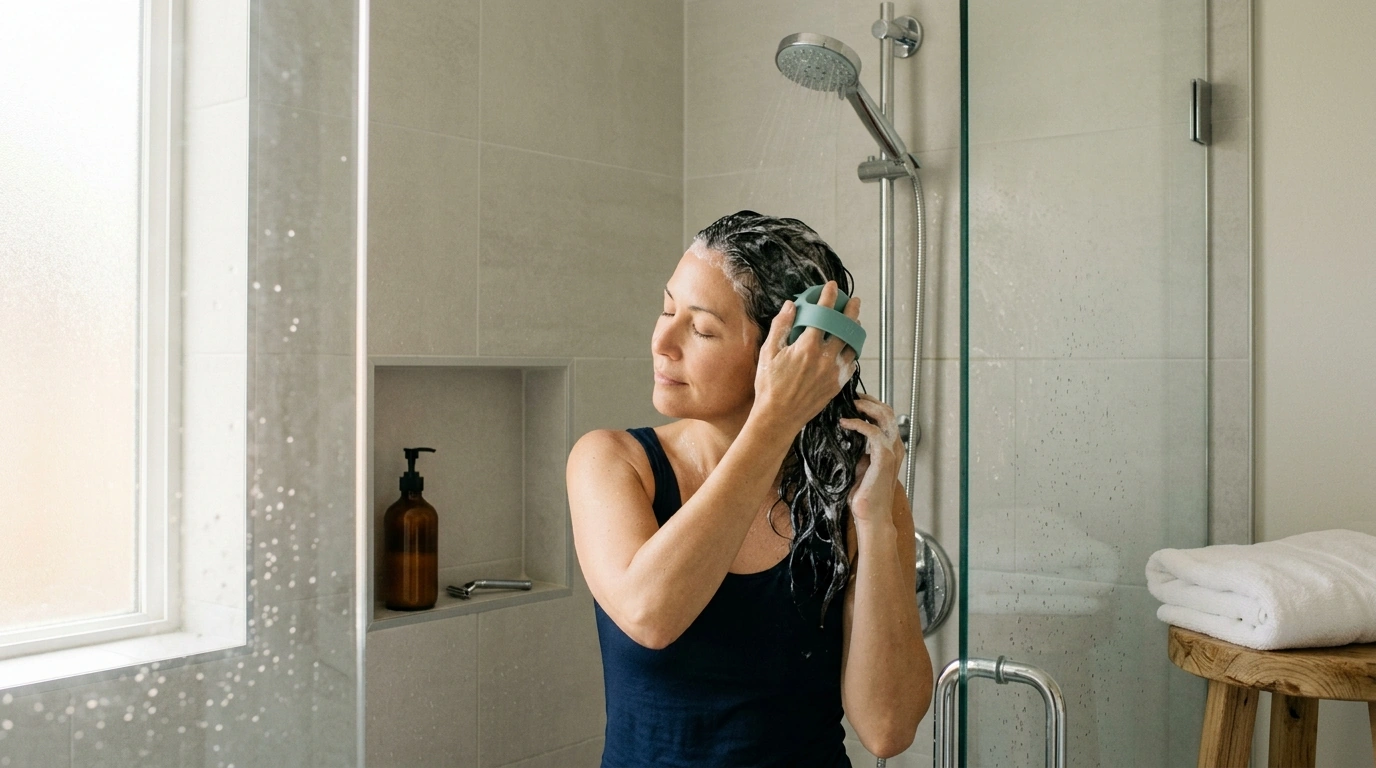
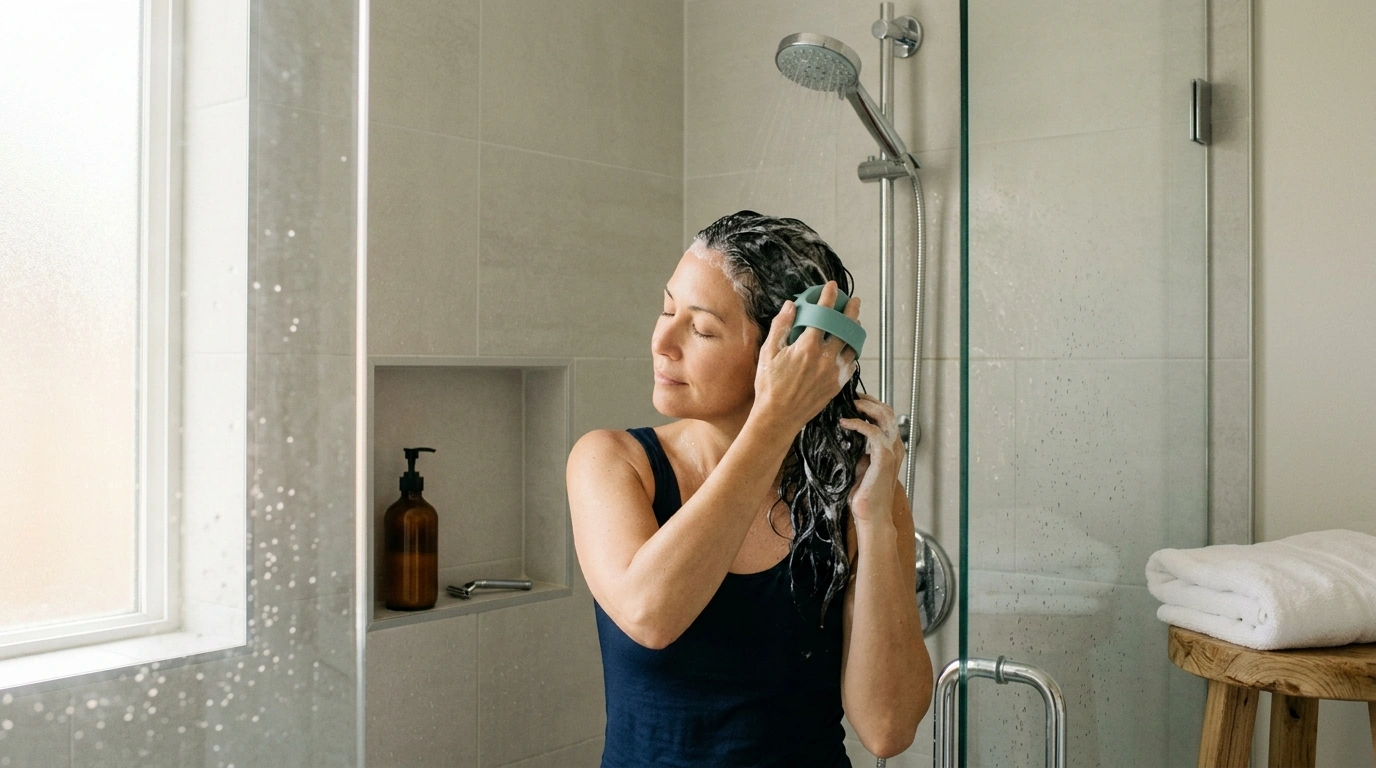
A soft silicone scalp brush can help distribute shampoo without the abrasion caused by hard bristles. Use light pressure and small circular motions for no more than one or two minutes, stopping if the scalp feels sore.
For technique and tool-selection details, see this scalp massage shampoo brush guide. Do not use a brush over open sores, inflamed patches, or broken skin.
Prevent Buildup From Returning
Rinse until the water runs clear and no slippery cleanser remains near the roots. Wash brushes, combs, bonnets, and pillowcases regularly so oil and residue are not transferred back to clean hair.
Limit heavy oils and waxes directly on the scalp, and use clarifying products only as needed to avoid excessive dryness. Seek medical care if thick scaling persists, spreads, causes hair loss, or is accompanied by pain, bleeding, or discharge.
How to use the brush
1
Store the brush where it stays dry and reachable
2
Match the brush attachment to the seat or carpet surface
3
Run the brush slowly across upholstery seams and floor edges
4
Empty and recharge the brush after the remove heavy check
FAQ
What causes thick skin buildup on the scalp?
Thick skin buildup on the scalp may result from excess oil, dead skin, product residue, dandruff, seborrheic dermatitis, eczema, or psoriasis. Persistent plaques, severe itching, redness, or hair loss should be evaluated by a dermatologist.
How do I get gunk out of my scalp?
To get gunk out of your scalp, soften it with warm water, work in a suitable clarifying shampoo, and massage gently with fingertips or a soft silicone brush. Rinse completely and avoid picking, scraping, or using harsh undiluted household ingredients.
See if Exfoliating Scalp Massage Shampoo Brush & Body Scrubber fits your setup













Leave a comment