How to Tell If a Mason Jar Is Valuable

60% off on product page · save $29.30
How to Tell If a Mason Jar Is Valuable

How Can You Tell If a Mason Jar Is Valuable?
A Mason jar may be valuable when its age, color, maker, design, and condition set it apart from common canning jars. Examine the entire jar in bright, indirect light, and avoid cleaning it aggressively until you know whether the glass, closure, or label is collectible.
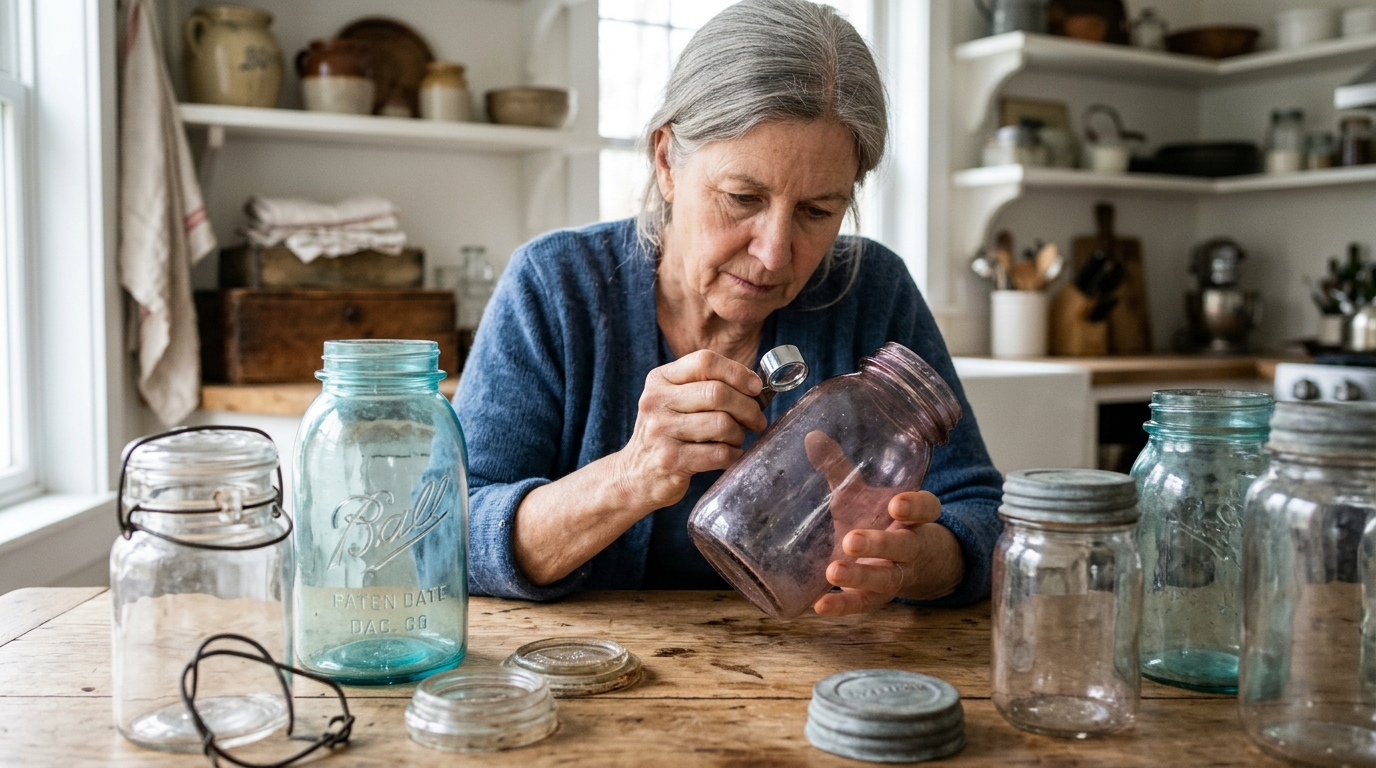
Check the Maker’s Mark and Embossing
Raised lettering can identify brands such as Ball, Atlas, Kerr, and Mason’s Patent Nov. 30th 1858. Compare the logo style, lettering, patent date, and mold details with dated reference examples; this vintage embossed glass storage jar guide explains additional features worth examining.
Featured in this guide
Vintage Embossed Glass Storage Jar with Airtight Seal – 23.7 oz
Look at the Glass Color and Manufacturing Clues
Clear jars are generally common, while certain amber, olive, cobalt blue, black glass, and unusual aqua shades can command more interest. Check for bubbles, waviness, mold seams, a rough pontil mark, or hand-finished lips, but remember that imperfections alone do not prove rarity.
Inspect the Closure and Condition
Original zinc lids, glass inserts, wire bails, rubber rings, and matching closures may increase desirability. Hold the jar to a light and check the rim, base, and threaded neck for chips, cracks, bruises, or repairs; serious damage usually reduces value even when the jar is scarce.
Confirm Rarity Before Estimating Value
Mold numbers on the base are often production identifiers rather than dates, so do not use them alone to price a jar. Search completed auction sales for the same brand, color, size, closure, and condition, then consult a specialist when embossing errors or unusual glass suggest a rare variation.
FAQ
What is the most sought after Mason jar?
The most sought-after Mason jar is often a rare color or error variant, such as an uncommon Ball jar with unusual embossing. Scarcity, documented authenticity, and excellent condition matter more than brand name alone.
How do I know if my Mason jars are vintage?
Vintage Mason jars often have older logo styles, distinctive seams, bubbles, hand-finished rims, or period closures. Match each Mason jar’s embossing and construction to reliable manufacturer timelines.
What do the numbers on the bottom of old Mason jars mean?
Numbers on old Mason jars usually identify a mold, factory line, or production batch. They generally are not manufacturing dates and rarely establish value by themselves.
How much do old Mason jars sell for?
Old Mason jars may sell for a few dollars, while scarce colors, errors, and rare models can bring hundreds or more. Actual prices depend on condition and recent sales of comparable jars.
How to tell what Mason jars are worth money?
Mason jars worth money typically combine rarity, unusual color, desirable embossing, and minimal damage. Compare exact matches in completed sales rather than relying on active asking prices.
How to tell if a Mason jar is vintage?
A Mason jar may be vintage if its logo, glassmaking marks, closure, and construction match an older production period. Verify these features together because reproductions can imitate aged colors and lettering.
See if Vintage Embossed Glass Storage Jar with Airtight Seal – 23.7 oz fits your setup












Leave a comment