Essential Outdoor Fabric Care: Clean, Protect & Store
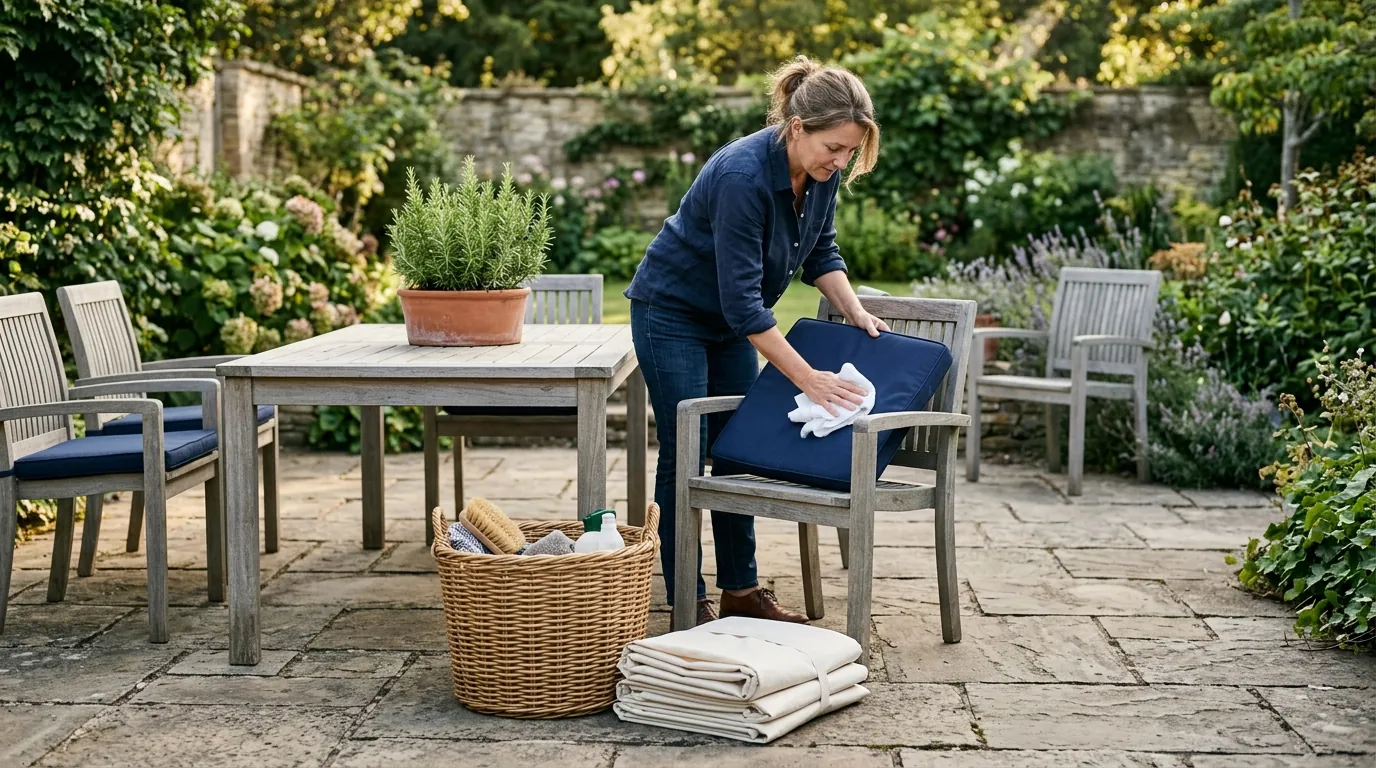
Essential Outdoor Fabric Care: Clean, Protect & Store
Why Outdoor Fabrics Need a Dedicated Care Routine
Ultraviolet exposure can gradually fade colors and weaken fibers, while rain and humidity may leave cushions damp long enough for odors or mildew to develop. Airborne debris, food, sunscreen, body oils, and bird droppings can also discolor fabric or attract additional dirt.
Routine maintenance is different from stain removal or seasonal restoration. Brushing off pollen each week requires a gentler process than treating an oily spill or washing cushions before winter storage. Before using detergent, vinegar, chlorine bleach, stain remover, or fabric protector, check the manufacturer’s care label. Promptly removing organic debris and drying wet items can help discourage mildew; the EPA’s moisture and mold guidance also emphasizes controlling moisture as a key preventive step.
Why Outdoor Fabrics Need a Dedicated Routine
Common outdoor materials include solution-dyed acrylic, polyester, olefin, vinyl-coated fabric, and outdoor canvas. Each responds differently to water, heat, chemicals, and scrubbing. Removable covers may be washable, whereas fixed upholstery often needs careful spot-cleaning. Waterproof coatings and water-repellent finishes can also require specialized products.
Test every cleaning solution on a concealed area. Let the test spot dry, then inspect it for fading, stiffness, texture changes, or coating deterioration. Even when the face fabric is highly durable, seams, zippers, backing, foam inserts, and applied finishes may be more vulnerable.
Outdoor Fabric Care at a Glance
| Fabric or Item | Routine Cleaning | Main Precaution | Suggested Frequency |
|---|---|---|---|
| Solution-dyed acrylic cushions | Brush away debris; wash with mild soap and water | Confirm instructions before using bleach | Weekly; deeper cleaning seasonally |
| Polyester outdoor covers | Vacuum or brush, then spot-clean | Avoid unapproved heat and harsh chemicals | After spills and before storage |
| Olefin upholstery | Use mild detergent and rinse thoroughly | Prevent residue that can attract dirt | Monthly during frequent use |
| Vinyl-coated fabric | Wipe with a soft cloth and mild soapy water | Avoid abrasives and solvents | Every few weeks |
| Umbrella or awning fabric | Brush dry debris away before gentle washing | Dry completely before closing | Several times per season |
Featured in this guide
Essential Fabric Care for Outdoors | Outdoor Fabric Care eBook | Digital Download Guide for Cleaning, Protecting & Maintaining Outdoor Fabrics
Know What to Avoid
Avoid pressure washing, machine drying, hot water, and chlorine bleach unless the manufacturer expressly approves them. Stronger is not automatically better: excessive heat, force, or chemical exposure may affect color, texture, stitching, backing, or applied finishes.
When a mark remains after one treatment, repeating a compatible gentle process is generally preferable to immediately escalating to a harsher chemical.
Spills, Oily Marks, and Mildew
Blot fresh liquid spills with a clean, absorbent cloth rather than rubbing them deeper into the fibers. For oily marks, use an approved absorbent or upholstery cleaner and work from the outside toward the center.
Before treating mildew, confirm which solution is permitted for the fabric. Clean nearby frames as appropriate and ensure the cushion filling dries completely. Diluted white vinegar may suit certain washable materials, but it can affect specialty dyes, coatings, or finishes. Never combine vinegar with chlorine bleach.
Protection Between Cleanings
Furniture covers, shade, and dry indoor storage can reduce unnecessary exposure. Rotate cushions to distribute sunlight and wear, move textiles away from standing water after rain, and preserve airflow around and beneath each cushion.
If water no longer beads on the surface, consider a protector approved for the exact material. Clean and dry the textile first so dirt and stains are not sealed beneath the treatment. A quality umbrella can also provide shade for a seating area; the Rotation Offset Outdoor Sun Shade Umbrella is one available option.
Seasonal Maintenance and Storage
Begin spring with an inspection of seams, zippers, fading, coatings, stains, and cushion inserts. During the active season, brush surfaces weekly and respond to spills promptly. Before long-term storage, complete a thorough wash and allow enough time for every layer to dry.
Store clean textiles in a breathable, dry location rather than sealing damp cushions in plastic. Check stored pieces periodically for condensation, pests, odors, or concealed moisture.
Keep the Routine Close at Hand
The downloadable Essential Fabric Care for Outdoors digital guide offers a convenient reference for cleaning, protecting, and maintaining outdoor textiles.
Keep it accessible while preparing furniture for summer, responding to a spill, or completing end-of-season storage. Review the product page for current purchase and delivery details.
FAQ
What is the best fabric cleaner for outdoor fabric?
The safest starting point is mild soap or a cleaner specifically approved by the fabric manufacturer. Test it in a hidden area, clean gently, and rinse thoroughly.
Can you use Dawn dish soap to clean outdoor cushions?
A small amount of diluted mild dish soap may suit some washable outdoor fabrics, but manufacturer instructions take priority. Avoid soaking the filling, rinse away residue, and air-dry completely.
Can I use vinegar to clean outdoor cushions, and if so, how?
Diluted white vinegar may be suitable for certain washable fabrics, but first confirm compatibility and test a hidden spot. Apply sparingly, rinse when required, and never mix vinegar with chlorine bleach.
See if Essential Fabric Care for Outdoors | Outdoor Fabric Care eBook | Digital Download Guide for Cleaning, Protecting & Maintaining Outdoor Fabrics fits your setup













Leave a comment